
What is CFD Analysis and How is it Done?
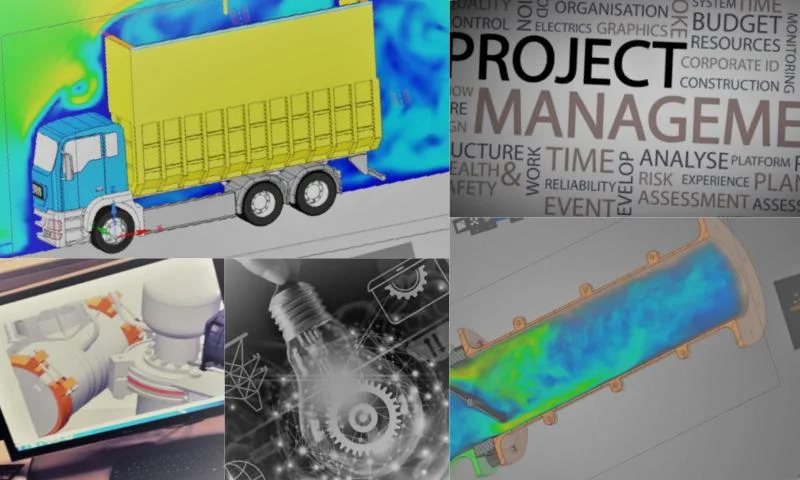
Sectors Where CFD Analysis is Used
CFD, which stands for Computational Fluid Dynamics in Turkish, is a code of fluid mechanics. The term, which refers to the solution of problems where fluid behaviors have an effect using algorithms and numerical methods on computers, is supported by software developments. CFD analysis, which helps to easily model supersonic flows, helps to increase efficiency in many sectors. The sectors where CFD analysis is used are diverse. These sectors include environment, energy, automotive, space and aviation, medical applications, and many more. The analyses, which can be prepared with the support of companies such as, provide information about time-dependent fluid behaviors or steady-state regimes. CFD analysis, which enables the analysis of many points from heat transfers to temperature distributions, speed, and pressure, also provides information about multiphase flows.
Advantages of CFD Analysis
CFD analysis has many advantages. Systems that provide information about fluids with constant density and compressibility help to maintain engineering calculations. CFD analysis, which provides more complex models that cannot be calculated analytically; helps to process these operations with numerical methods. Within the scope of this process, it is very important to determine data such as pressure losses, heat transfer, and flow rates while the part is still in the design stage. In the CFD analysis process, help is provided in calculating fluid behaviors. Analyses that provide important and fast results in the analysis of rotating parts, advanced turbulence models, interaction analyses of solids and liquids, and the determination of Newtonian and non-Newtonian fluids are used in many sectors, especially the HVAC sector.