
Brazed (Welded) Heat Exchanger
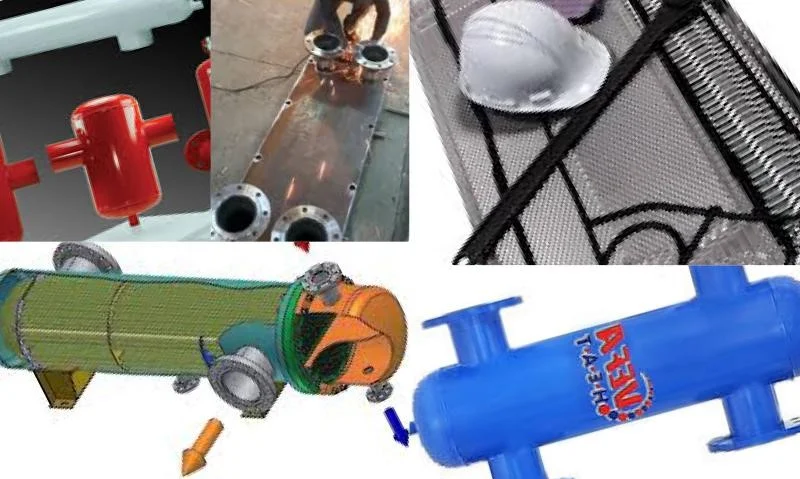
Features of Brazed Heat Exchangers
To increase the efficiency obtained in heat transfer, a group of plates has been corrugated. The front and back of this plate pack are equipped with frames that protect the plate pack and perform sudden cooling and heating adjustments. For brazed heat exchangers and much more, you can visit https://www.vefaheat.com/esanjorler/lehimliesanjor/ and get information about all our heat transfer systems. Heat exchangers of this type are called "brazed heat exchangers".
What to Consider When Choosing a Brazed Heat Exchanger
Unlike ordinary heat exchangers, brazed heat exchangers do not use rubber gaskets. Thanks to this feature, they can go down to -180 degrees in cooling units and up to +220 degrees in sudden heating systems. They perform evaporator and condenser functions in cooling systems in the best way. In heating applications, it increases the fluid temperature suddenly, thus increasing the efficiency during transfers. Another important feature is its leak-proofness and high efficiency at very high temperatures. Thanks to the few moving connections in its structure, it is well protected against external impacts. The thin and dense element used in its structure saves significant space. The turbulences on the plates prevent the exchanger from clogging during heat transfer. For this reason, money that would be spent on maintenance costs is saved. With these features that provide many advantages, it is an economical, safe, and efficient heat exchanger. Another factor that allows it to be among the top choices is its mechanical structure. With its structure designed by engineers, the fluid entering it causes turbulence in the system. This turbulence reduces the formation of sediment. Consequently, it requires less maintenance. Brazed heat exchangers with reduced maintenance frequency will provide more comfort to the user in terms of economy by saving on maintenance costs.