Solar Eclipse: The Captivating Spectacle of Natural Phenomena

A solar eclipse is an astronomical event that occurs when the Moon or another celestial body partially or completely obscures the Sun. This impressive event is considered one of the greatest natural spectacles in the sky and captivates people. For information on this topic and to ask your questions, you can look at the relevant online companies on the internet pages and examine them in detail from here.
Types and Formation of Solar Eclipses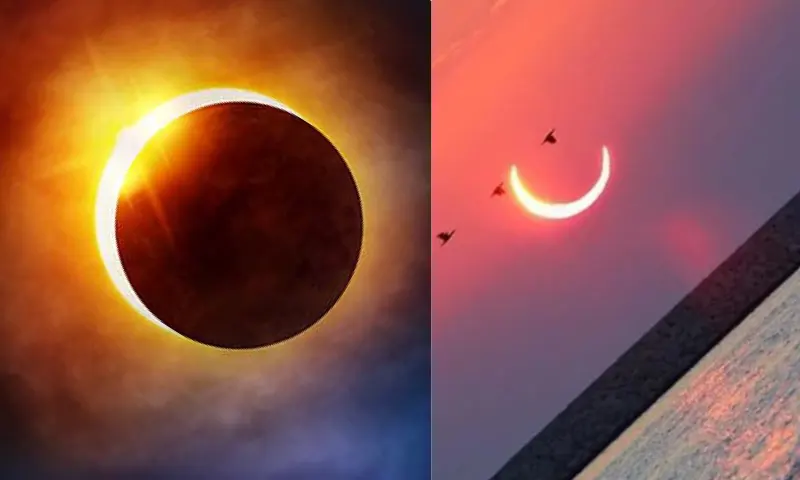
Solar eclipses occur in three main types: partial, total, and annular. A partial solar eclipse occurs when the Moon covers part of the Sun, while a total solar eclipse occurs when the Moon completely covers the Sun. An annular solar eclipse occurs when the Moon completely covers the Sun, but due to the Moon's distance from Earth, a ring of light appears around the edges of the Sun. A solar eclipse occurs when the Moon's orbit aligns with Earth's orbit and the Moon comes between the Earth and the Sun. This happens during the new moon phase, and the Sun passes in front of the Moon and becomes visible.
Observing and Effects of Solar Eclipses
Solar eclipses can be safely observed using appropriate equipment. You can look directly at the Sun using special solar glasses or solar filters, or the image of the Sun can be projected onto a surface using the projection method. Some effects can also be observed in the surrounding natural environment during a solar eclipse. For example, there may be signs such as a slight drop in air temperature, birds becoming quiet, changes in the behavior of some animals, and shadowing effects. A solar eclipse is a rare and mesmerizing event in the sky. This natural phenomenon, which can occur in different types, captivates people and has been an important subject of research in the scientific world. Solar eclipses offer an opportunity to explore the immense beauty of nature and the complexity of the universe, giving people a chance to closely follow the extraordinary phenomena in the sky.