
The Shining Lights of the Sky

Stars are giant balls of gas that adorn the night sky and have been emitting light for millions of years. The closest star to us is the Sun, which plays a vital role as the source of life. Other stars appear as mere dots because they are much farther away from us. Each occupies a unique place in the sky with its own sparkle. Since ancient times, humans have marveled at the stars, associating them with mythology, destiny, and time. In reality, stars are not just romantic figures but scientific resources that help us unravel the secrets of the universe. To get information on this subject and ask your curious questions, you can look at relevant online companies on web pages and examine them in detail from there.
How Do They Form and Live?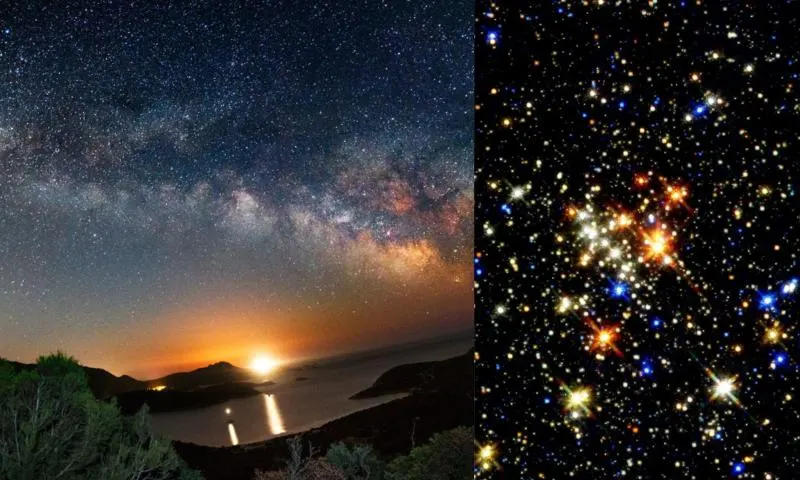
A star forms from the collapse of gas and dust clouds in space. With this collapse, the temperature increases, and nuclear fusion begins in their cores. As hydrogen atoms turn into helium, an enormous amount of energy is released; this energy creates the star's light. Stars, just like living beings, are born, grow, age, and die. Depending on their mass, some can turn into white dwarfs, while others can transform into black holes through supernova explosions. A star's life can last for millions or even billions of years, and during this process, they spread new elements into the universe.
Wonders That Give Meaning to the Night
Stars affect people not only scientifically but also emotionally. Watching the stars on a clear night brings a sense of calm and peace. Additionally, star clusters in the sky are named as constellations. Constellations like Ursa Major, Orion, and Andromeda also help in finding direction in the sky. Today, with telescopes, we can see much more distant stars, and even discover planets around some stars. Stars are unique celestial bodies that make us question both the vastness of the universe and our own place in it.